Surf club roster Excel – Free Template (2026)
0
Free download
FIFO roster tracker with employee, swing, travel and pay fields plus summary and instructions sheets for mining and energy teams.
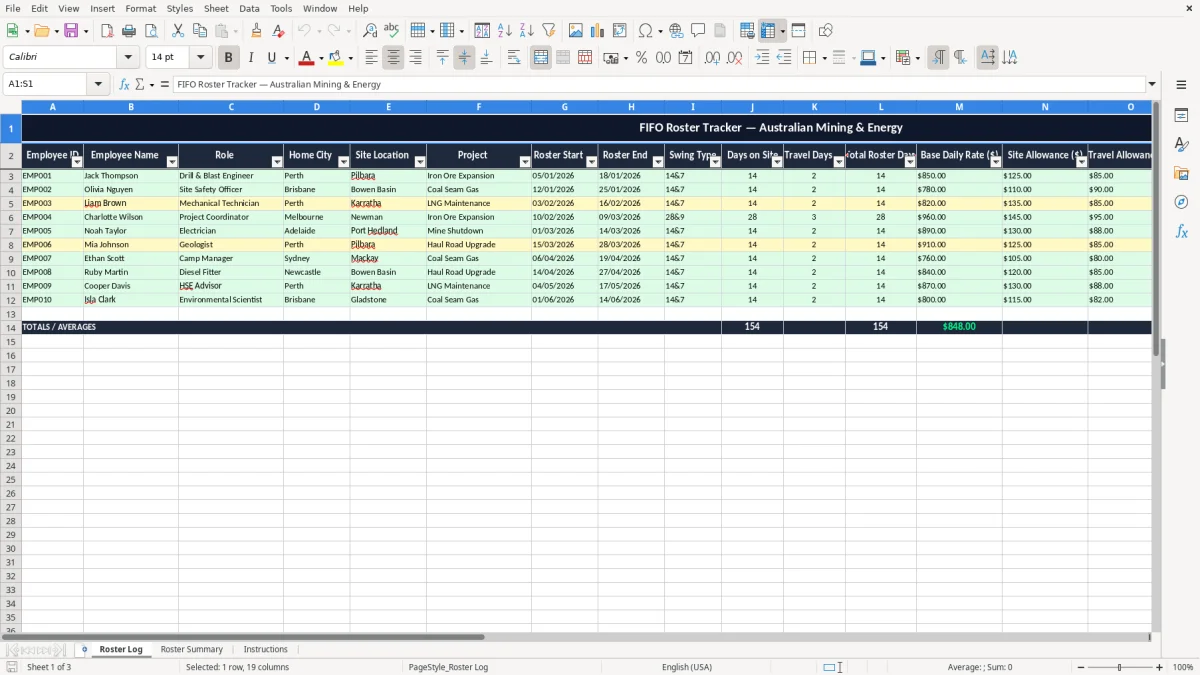
This FIFO roster tracker Excel template helps you track employee swings, travel days, allowances and gross roster pay in one place. It includes a detailed log sheet, a roster summary sheet and an instructions sheet.
Use it when you need to sort out remote site rosters for mining, energy or construction crews. It gives you a clean way to record cash flow impacts, leave taken and the status of each swing without mucking about in separate files.
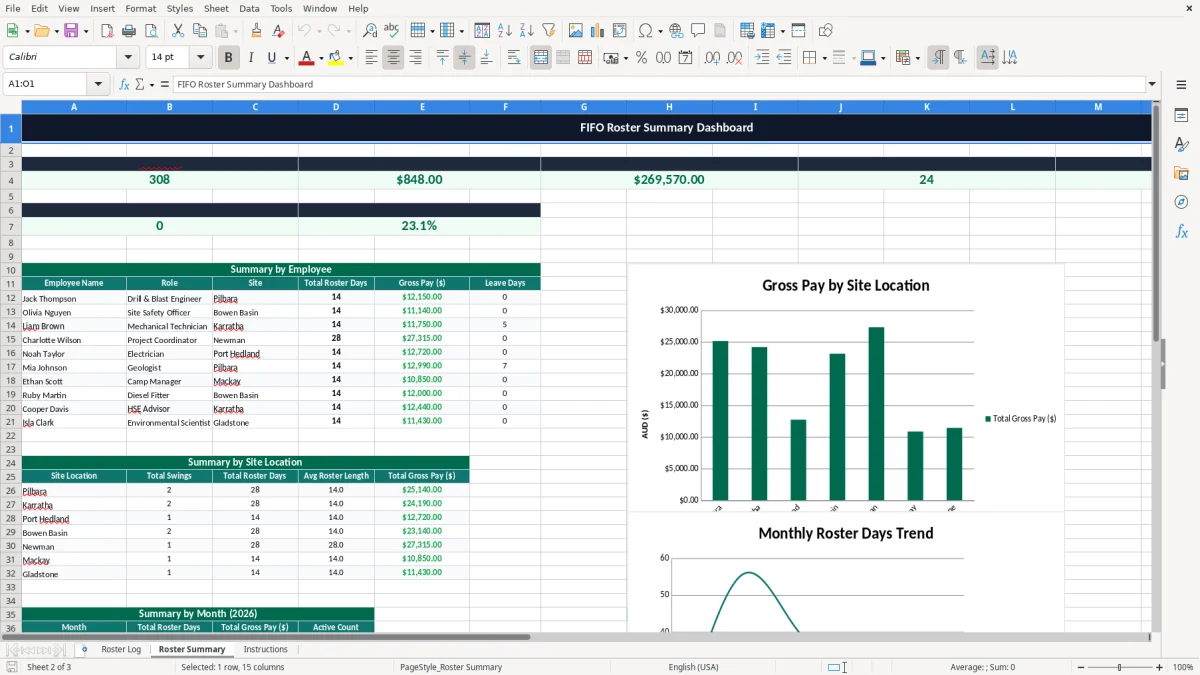
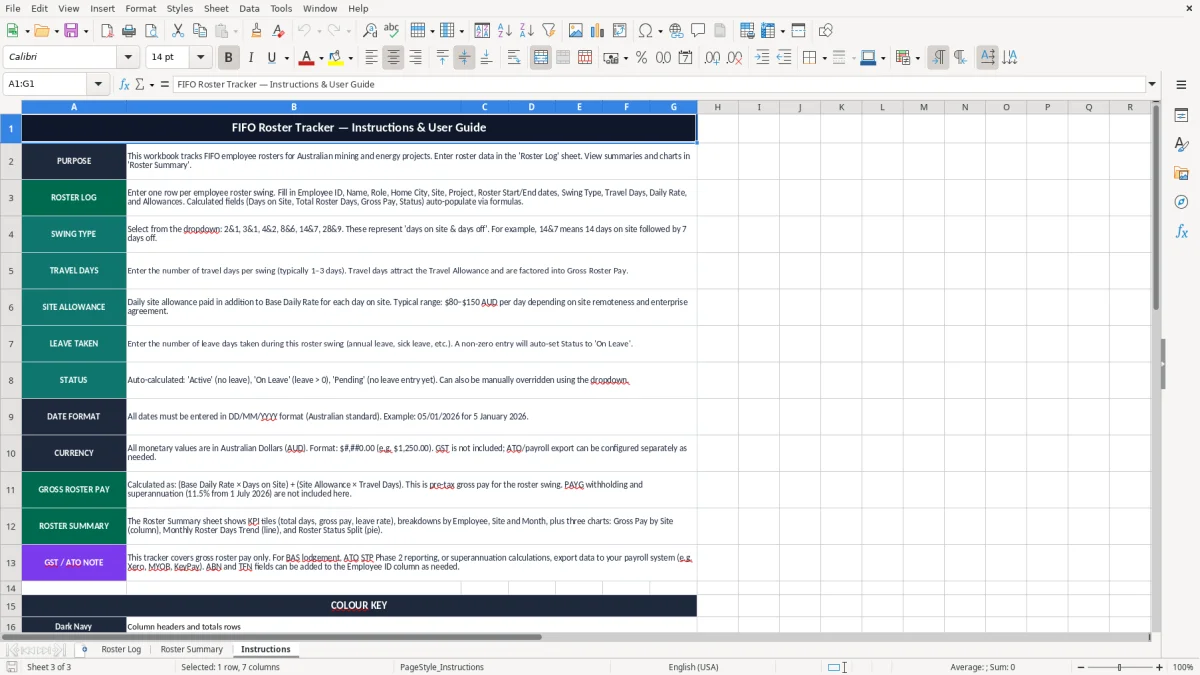
Image 1 shows the Roster Log, where you enter each worker’s details, dates and pay fields. Image 2 shows the Roster Summary, which rolls the data up for a quicker read, while image 3 gives you the instructions.
FIFO roster tracking is used by site managers, office admins and payroll staff who need to keep remote crews moving without missing pay details. A chippie on a 14-on, 7-off swing, a drill crew with 12 workers or a camp admin sorting 40 names across two projects can all use the same sheet to stay across it.
This template suits the point in the week when rosters change, flights get moved or leave gets approved. If you are juggling 18 employees on different swings, one missed travel day can throw the whole pay run off by $180 or more for a single worker.
In a small mining contractor, the office manager often updates the roster after each site call. In a Pty Ltd with 25 employees, the bookkeeper may use it before payroll cutoff to check that travel days, allowances and leave have all been captured.
The Roster Log sheet records Employee ID, employee name, role, home city, site location, project, roster start and end, swing type, days on site, travel days, total roster days and pay fields. That gives you enough detail to compare rostered time with what actually gets paid, instead of relying on memory or a whiteboard.
Say you have 8 workers on a 14-day swing with a $320 base daily rate, a $60 site allowance and a $40 travel allowance. If one person’s travel day is missed, the difference is $40 for that swing, and the paperwork headache is usually bigger than the dollar amount.
FIFO rosters sit close to payroll, so the numbers need to line up with PAYG withholding, STP reporting and superannuation. The current super guarantee rate is 11.5% in 2026, and it is paid quarterly to a complying fund on ordinary time earnings, so any regular roster allowance needs to be checked properly.
For most small businesses, Fair Work award rates and the National Employment Standards matter as much as the roster itself. A remote site worker on a 12-hour shift may be paid ordinary hours, overtime or a site allowance depending on the award, and that can easily change the gross pay by $150 to $300 in a week.
The ATO expects business records to be kept for 5 years, including timesheets, payslips, PAYG records and documents that support deductions and super. If you are paying a crew across 3 projects and 2 pay cycles, the roster sheet becomes the evidence trail when you reconcile payroll to the bank.
If you are running the roster through a company, the entity is usually a Pty Ltd registered with ASIC. That matters because the roster may feed into payroll, contractor payments and job costing, and you need clean records to support what was paid to employees versus contractors with an ABN.
Suppose a worker is rostered for 10 site days at $330 a day plus $50 travel allowance. The sheet shows $3,350 gross roster pay, and that figure should match the pay run before super and tax are applied, otherwise your reconciliation gets messy very quickly.
That same record also belongs on an ABN invoicing form when contractor totals need to line up with the roster and the pay run.
The biggest FIFO mistakes are usually not dramatic — they are the small misses that stack up. A travel day left out, a leave swap not recorded or a swing length entered wrong can cost you a payroll correction, a late-night call from site and a frustrated worker waiting for $200 to land.
When someone flies in on Tuesday and flies out on Friday, the travel day often gets forgotten if the roster is copied by hand. Miss a $40 travel allowance across 15 workers in one fortnight and you have already left $600 out of the pay run, before anyone notices.
If status is not updated from pending to confirmed, the same person can be rostered twice or left on the wrong site. In a 30-worker crew, that can mean double-booked flights, extra camp costs and a spreadsheet mess that takes half a day to untangle.
Leave taken needs to be marked properly because it affects both the roster and the pay run. One unpaid leave day on a $320 daily rate is $320 off the employee’s gross pay, and if the note is missing you will spend time chasing texts, emails and site calls to prove it.
Days on site, travel days and total roster days should always agree. If a worker shows 14 days on site and 4 travel days but total roster days still says 14, the error is obvious to payroll and usually means the swing has been entered twice or not updated after a flight change.
The template works best when you tie it to a fixed routine, not when you fill it in whenever you remember. Most teams get better results by updating the Roster Log after the Monday site call or just before the Friday pay run, when everyone is already checking who is on and who is off.
Data validation is handy once you have a few regular roles or status options, because it stops messy typing. Conditional formatting can also flag blank pay fields or mismatched dates before you send the roster to payroll.
If you are managing 100 workers across multiple sites, separate awards and changing allowances, the spreadsheet starts to creak. At that point, Xero or MYOB payroll plus a proper rostering system will usually save you more time than Excel, especially once the pay run needs stronger controls and audit trail.
At that stage, the next calculation usually shifts from rostering to pay packaging, and a salary sacrifice calculator becomes the natural way to test take-home pay.